- Report
Designed to Deliver
How Relationship Management Drives Infrastructure Project Success
Our latest Thought Leadership report, developed in collaboration with MIGSO-PCUBED and University College London, shows why inter-organizational relationships are one of the most overlooked drivers of infrastructure project success—and one of the most decisive. It outlines five evidence-based recommendations project professionals and leaders can immediately apply to strengthen collaboration, reduce risk, and improve project success.
Summary
Infrastructure projects are becoming more complex—and more dependent on how organizations work together. Yet how those relationships are structured and managed is rarely treated as a core delivery discipline. This research explores how leading infrastructure organizations are rethinking collaboration as a driver of performance, and what it takes to embed it into the way projects are governed and delivered.
The report, developed in partnership with MIGSO-PCUBED and University College London, draws on 60 qualitative interviews with senior leaders across major infrastructure projects in the United Kingdom, Spain, France, Germany, and Australia and validated through academic research with University College London.
- Date
July 2026
- Content Type
- Topics
- Industries
Construction, Engineering, Transportation & Infrastructure, Energy & Utilities
$1.6tn
potential annual value from closing construction's productivity gap
5x
projects more likely to succeed when complexity is managed effectively (88% vs 14% success rate) PMI Pulse of the Profession, 2026
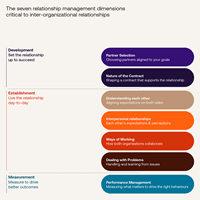
Source: MIGSO-PCUBED and UCL
Design relationships with purpose
Design contracts that support collaboration
Make leadership a delivery lever
Treat relationships as project risk
Invest in relational capability
Voices Behind the Insights
Meet the contributors and experts whose insights helped shape this report.
“You need a commercial model that underpins the collaboration to incentivize the behaviors you need. The previous traditional model incentivized completely the wrong things — it created a perverse set of behaviors.”
Program Alliance Director, UK Highways
“We have been able over the years to develop really strong relationships with key people… our clients can see they trust us… that increases the likelihood of project success”
Director, Engineering Consultancy, Queensland, Australia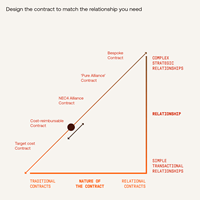
Related Content
The Construction Project Management Talent Gap
Needs, Challenges and Opportunities
Discover how to close construction’s growing project management talent gap and learn the key skills, barriers, and actions needed to stay competitive.