PMI Certified: How the PMP and PMI-ACP Helped One Project Manager Transform His Career
Earning the PMP helped Guilherme Ozores Pires, PMI-ACP, PMP, move past recruiter screening, secure interviews and build his professional confidence. After earning the PMI-ACP less than one month later, he landed his dream role at Siemens Energy within six months.

For years, Guilherme Ozores Pires, PMI-ACP, PMP, had one professional goal: joining one of the world’s major energy companies.
Based in São Paulo, Brazil, 34-year-old Guilherme began his career in civil and geotechnical engineering—not project management. But while working as a field engineer for a vendor on a major project, he found himself coordinating more than eight teams and suppliers, working alongside the client’s project management team and managing costs, schedules, stakeholders, communications and alignment.
That experience helped him recognize something important: He was already doing the work of a project manager, even if he didn’t yet have the title. Working closely with project professionals on the client side gave him a clearer picture of project management as a career and where it could take him.
Guilherme had the experience and was already leading projects. But when he set his sights on those companies, getting through recruiter filters proved difficult.
Then everything changed.
After earning his Project Management Professional (PMP)® certification—and his PMI Agile Certified Practitioner (PMI-ACP)® certification less than a month later—recruiters started calling. Interviews followed. Within six months, Guilherme had accepted a senior project engineer role at the company at the top of his list: Siemens Energy, one of the world’s leading energy technology companies, whose technology supports roughly one-sixth of global electricity generation. There, he manages large, complex power transformer projects that support critical energy infrastructure.
Along the way, volunteering with the PMI São Paulo Chapter and being selected as a PMI NextGen Outreach Committee volunteer helped expand his leadership experience and connect with project professionals around the world.
We spoke with Guilherme about how he discovered that project management was already part of his career, the credentials that helped open new doors, why relationships matter more than ever and why he believes continuous learning is one of the best investments project professionals can make.
Guilherme’s career journey at a glance:
- Earned the PMP in 15 days
- Earned the PMI-ACP less than one month later
- Began receiving recruiter calls and interview invitations
- Joined Siemens Energy within six months
- Now manages more than a dozen large power transformer projects
Deciding to earn the PMP
What motivated you to pursue the PMP?
After realizing that I had already been working as a project manager for several years, I felt that earning the PMP was something I had to do, especially because it’s considered the gold standard in project management.
I postponed it for almost two years after submitting my first application. As soon as I completed another degree in software engineering, I started studying using free resources from the project management community and Project Management Professional (PMP)® PMI Study Hall®, which I consider essential for preparation and by far the best study tool available.
Within 15 days, I went from zero to PMP.
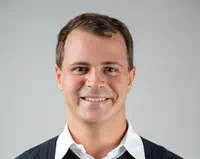
I consider Project Management Professional (PMP)® PMI Study Hall® essential for preparation and by far the best study tool available. Within 15 days, I went from zero to PMP.
How did PMI Study Hall® help you pass?
One weekend, I decided to take my first four-hour mock exam on PMI Study Hall® and scored 79%. The next day, I completed another one, and then another one the following day. It became a real saga—79% on all of them.
That Sunday, I scheduled the actual exam for the earliest available date. I will never forget the feeling of leaving the exam completely exhausted, receiving the paper and seeing that I had passed with an overall Above Target score.
It was an indescribable feeling. I honestly don’t have the words to explain it. One of the happiest moments of my professional life. Hard work and sacrifice pay off.
How the PMP can create career opportunities
Before earning your PMP, you had one big career goal: joining one of the world’s major energy companies. What changed after becoming certified?
This is where everything took a huge leap and stepped up. The week after passing the exam, I started applying for positions at companies where I was genuinely interested in working, and recruiters started calling. To my surprise, the results came much faster than I had expected.
Before earning the PMP, it had been extremely difficult to pass the initial recruitment filters. After becoming certified, I started receiving positive responses and invitations to interviews.
Before earning the PMP, it had been extremely difficult to pass the initial recruitment filters. After becoming certified, I started receiving positive responses and invitations to interviews.
Just as importantly, or perhaps even more importantly than the new opportunities, the PMP renewed my self-confidence. I believe that the combination of greater confidence and access to new opportunities was essential for the next steps in my career.
Looking back, what skills did the PMP help strengthen?
The PMP preparation process strengthened several areas of my project management knowledge. For me, the most important part was seeing how closely my soft skills aligned with what the exam expects from a project manager.
It reinforced the importance of connecting project decisions with business needs and understanding the complete project lifecycle, from the initial commercial concept through final delivery.
It also strengthened my perspective on stakeholder management, understanding expectations, communicating effectively and delivering the best possible outcome within the circumstances you have.
The PMP also reinforced my sense of "good is not good enough" and ownership. You are in charge. You are the project manager. You assess the situation and make the decision.
Earning the PMI-ACP after the PMP
Less than a month later, you earned your PMI-ACP. Why did you decide to keep going?
At the time, I was considering transitioning into the technology industry and energy. I thought developing deeper agile knowledge could be an important step toward achieving that goal and thinking about the future of project management.
I read that the PMI-ACP could be a natural next step after the PMP. In practice, the PMI-ACP is much denser and goes significantly deeper into agile principles and practices. I earned the PMI-ACP less than one month after earning my PMP.
| Aspect | PMP | PMI-ACP |
|---|---|---|
| Primary focus | Project management across predictive, agile and hybrid delivery. It emphasizes leading projects, managing stakeholders and delivering outcomes. | Agile ways of working across approaches such as Scrum, Kanban, Lean, XP and TDD. It emphasizes adaptability, iterative delivery and agile team practices. |
| Best fit | Project managers, project leads and professionals who need broad project leadership credibility. | Practitioners working in agile or hybrid environments, including team members, leads and those supporting agile delivery. |
| Scope | Enterprise-recognized certification for overall project leadership. | Specialized certification for agile knowledge and real-world agile experience. |
| When to choose it | Choose PMP when you want a general, high-recognition project management certification. | Choose PMI-ACP when your day-to-day work is centered on agile delivery. |
How do the PMP and PMI-ACP complement one another?
If you genuinely want to challenge yourself, I believe the PMP and PMI-ACP are one of the best certification combinations available. I see the PMI-ACP as a strong complement to the PMP, particularly for professionals who want to invest more deeply in agility and who work with complex projects, not necessarily only in software.
I believe the PMP and PMI-ACP are one of the best certification combinations available.
Even when you work in a predominantly predictive environment, studying for and earning the PMI-ACP can add valuable new skills to the way you operate.
The PMI-ACP significantly improved the way I collaborate with teams and manage stakeholder relationships in scenarios involving high uncertainty in complex situations.
Using project management certifications in complex projects
Today you're a senior project engineer at Siemens Energy. What does your role involve?
Today, I work as a senior project engineer, which we internally refer to as a project manager, at Siemens Energy within the Grid Technologies business.
I currently manage more than a dozen large power transformer projects. These are highly complex pieces of equipment weighing more than 200 tons that perform a vital function in substations and in the global energy system. Beyond protecting project margins and managing the routine activities required for project execution, I am also responsible for building strong relationships with our customers, going the extra mile for them while defending Siemens Energy’s interests.
This is the part of the role I enjoy the most—relationship, partnership—and it is also where a project manager invests a significant amount of energy.
One very important point is that project managers usually have no formal authority over these teams. We need to influence and lead thousands of highly talented colleagues across the factory and around the world, bringing together teams across Siemens Energy—from supply chain, quality, engineering, manufacturing, logistics, and commercial functions to senior leaders at the director and C-suite levels, along with many other stakeholders.
How has an agile mindset influenced the way you lead complex projects and collaborate with stakeholders?
An iterative and incremental approach can be applied to stakeholder relationships. In agile mindset, the team should always be involved and decide together. This kind of mindset helps a lot in complex environments, even when working in predictive like where I am right now.
The priority is to keep stakeholders informed about what is being done, even when we are navigating an environment filled with uncertainty. This is my preferred way of working with customers, partners and other stakeholders. Even when uncertainty is high, the environment becomes manageable and navigable when communication is continuous and progress is made visible.
Giving back through project management volunteering
Volunteering has also become an important part of your journey. Why?
What truly lights me up is being able to use my knowledge to elevate someone and support their growth, either personally or professionally. That purpose is one of the main reasons why I volunteer with PMI, both globally as a NextGen Outreach Committee member and locally with PMI São Paulo Chapter.
When I see that something I shared has helped another professional grow and succeed, and I receive a message or a call saying that I contributed to an important personal or career achievement, nothing compares to that feeling. Sometimes, all someone needs is a real opportunity.
The most important project management skills for the future
Everyone talks about AI. You say the most important skill for the future is something else. Why?
Relationship skills. Relationships are vital to project management. Projects are made by people, for people and we should never forget that.
Of course, AI and the ability to evolve in this complex environment are also important. AI can help us analyze information, reduce time spent on tasks and create many new opportunities. The possibilities with AI are limitless. But there is one thing AI cannot replace: people. So, people must always come first.
Advice for earning the PMP and PMI-ACP
If someone is thinking about earning their PMP or PMI-ACP, what would you tell them?
Go for it! Earn the PMP first and then begin preparing for the PMI-ACP immediately afterward. They complement each other extremely well. I believe the best time to pursue them is one after the other because the agile content you studied for the PMP will still be fresh in your mind.
Finally, what advice would you give someone just beginning their project management journey?
My advice, especially to the next generation, is not to feel pressured to have everything figured out from the beginning. Explore, learn and pay attention to what genuinely motivates you. When you find that direction, step up and take ownership. Do not wait for a title or formal authority to lead. Build trust, bring people together, learn from mistakes and keep moving things forward.
Tools support delivery, but people make it happen because no matter how much technology and AI evolve, they can’t replace trust, empathy and genuine human connection.
I didn’t know what I wanted to do with my life until just a few years ago. So, welcome. You aren’t alone.
Tags: Career Development | Project Management Certifications | Agile

Outside of Work
Guilherme grew up in São Paulo, Brazil, and recently welcomed his first child. Outside of work, he enjoys surfing, early morning workouts, learning about aerospace engineering and technology, spending time with his family and Border Collie, Lilo, and soaking up life outdoors. He's also looking forward to moving to the countryside of São Paulo, where he hopes to raise his growing family.
Build What’s Next in Your Career
Ready to strengthen your project leadership skills and open the door to new possibilities? Explore how the PMP and PMI-ACP certifications can help you take your career forward.
FAQs
Does the PMP help create career opportunities?
Yes. The PMP helps create career opportunities by validating project leadership experience and expertise, and it is recognized and demanded worldwide across industries.
Is the PMI-ACP only useful for software projects?
No. The PMI-ACP is not limited to software projects. It applies more broadly to professionals working in agile environments across industries and frameworks.
How do the PMP and PMI-ACP work together?
They complement each other. The PMP provides broad project leadership coverage across predictive, agile and hybrid approaches, while the PMI-ACP adds deeper agile knowledge and capability.
Can agile practices work in predictive environments?
Yes. Predictive, agile and hybrid approaches can work together, which means agile practices can be used within environments that are not purely agile.
About the Author
Autumn Granza, CAPM
Integrated Marketer
Autumn Granza is an integrated marketer and storyteller passionate about uncovering the human stories behind projects and their impact on the world around us. At PMI, she develops marketing campaigns and multichannel content strategies that engage audiences, inspire action, and connect people with the power of project management. Her work spans campaign strategy, storytelling, and audience engagement, helping people discover project management in places they might never expect.
Read More from PMI Blog



Related Insights
How to Ensure Collaboration Between Project Managers and Product Managers
Explore how project and product managers can bridge gaps, align priorities, and use agile to strengthen teamwork and delivery.
You May Also Like

Certification
Project Management Professional (PMP)®
3+ years of experience leading projects

Certification
PMI Agile Certified Practitioner (PMI-ACP)®
2+ years of experience
This certification validates your ability to engage stakeholders, apply agile approaches, and lead teams.
PMBOK® Guide
PMI Standard
Backed by the authority of PMI and shaped by professionals worldwide, the PMBOK® Guide defines the global standard for project management.