
- Guide
The PMI® GPM® Guide to Responsible Project Sponsorship
Governing whether projects remain worth doing
Sponsors authorize projects, define their mandate, and remain accountable for whether the work continues to justify its investment. This guide from PMI and GPM sets out what accountability requires in practice: mandate clarity, governance thresholds, explicit trade-offs and timely decisions.
Summary
Project managers are better prepared today than they have ever been, and yet too many projects still fail to deliver what they promise. The cause is rarely delivery effort— it is weakness in the decisions, authority and governance that shaped the work from the start.
Sponsors authorize projects and remain accountable for whether those projects continue to justify their investment. They translate strategy into mandates that delivery teams can act on. They govern trade-offs that project managers cannot resolve alone. Most have carried that responsibility without a shared understanding of what carrying it well requires. Sponsors have been named rather than developed, and accountability has been assigned rather than supported.
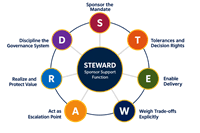
This guide closes that gap. It defines sponsorship as a governance discipline and sets out the seven STEWARD accountabilities that cannot be delegated without weakening governance: sponsor the mandate, set tolerances and decision rights, enable delivery, weigh trade-offs explicitly, act as the escalation point, realize and protect value, and discipline the governance system.
- Date
August 2026
- Content Type
- Topics
7
STEWARD accountabilities that sponsors own and cannot delegate without weakening governance
4
Decisions every sponsor owns across the project life cycle: authorize, continue, change, stop
13
Chapters covering mandate, governance, gatekeeping, sustainability, scale, AI, and decision aids
The STEWARD Accountabilities
From Strategy to Mandate
Authorize, Continue, Change, Stop
Sustainability Management Plan
AI as a DecisionSupport Tool
Sponsor Tools and Practical Aids
The STEWARD Governance Model
Figure 2 from the guide. STEWARD names seven sponsor accountabilities: sponsor the mandate, set tolerances and decision rights, enable delivery, weigh trade-offs explicitly, act as the escalation point, realize and protect value, and discipline the governance system. The value of the construct is in recognizing that these accountabilities operate together. Weakness in one is rarely isolated. It usually reflects a breakdown in how the overall system is being governed.
Voices Behind the Insights
The guide draws on PMI and GPM standards and on the practical reality sponsors face when delivery is underway and conditions are not ideal.
“A well-prepared project manager working without effective sponsorship is operating in conditions that constrain what they can achieve. Sponsors have been named, not developed. Accountability has been assigned, not supported. The role has been treated as an extension of seniority rather than a discipline in its own right.”
Joel Carboni, Ph.D.
Founder and CEO, GPM Global
Related Content
The PMI GPM P5 Standard for Sustainability in Project Management
The ontology behind the P5 Impact Analysis that feeds the Sustainability Management Plan.
Project Management Offices: A Practice Guide
How the PMO supports sponsorship through governance oversight, benefits realization and decision support.


