PMI Certified: How a PMP Helps Bring Project Management to Film and Television
Mitchell Politeski, PMP, helps bring stories to life from behind the scenes as a post-production supervisor, combining the creativity that first drew him to the industry with the people, organization and problem-solving skills that eventually led him to project management.

Mitchell Politeski, PMP, always knew he wanted to work in film. What he didn’t know was that a career built around creativity would eventually lead him to project management.
As he moved from editorial into post-production leadership, Mitchell discovered that some of his greatest strengths were bringing people together, creating structure and helping creative teams turn ideas into reality. Years later, earning the Project Management Professional (PMP)® certification gave a name—and a new set of tools—to work he had been doing all along.
Today, after more than 15 years in film and television, Mitchell has contributed to projects including the Amazon series “Every Year After”, Warner Bros. “Riverdale" and "Chilling Adventures of Sabrina", as well as “The Chicken Sisters”, “Octonauts” and “My Little Pony: The Movie”. And with the PMP and resources like PMI Infinity™ in his toolbox, he’s found a way to pair the creative career he dreamed about with the project management skills that help bring those stories to life.
We spoke with Mitchell about following your passion, discovering project management in an unexpected place and how certification can help you build a career around the work you love.
Mitchell’s career journey at a glance:
- Pursued a career in film with an initial focus on writing and directing
- Built experience across editorial, post-production, animation and live-action television
- Has worked on projects including “Every Year After”, “The Chicken Sisters”, “Octonauts”, “When Calls the Heart”, “A Series of Unfortunate Events” and “My Little Pony: The Movie.”
- Earned his PMP in early 2025
- Uses project management practices and PMI Infinity™ in his film and television work
Finding project management in film
You knew from a young age that you wanted to work in film. How did that eventually lead you into project management?
Since I was a teenager, I wanted to work in film. I pursued directing, and one of the things that appealed to me about film directing was working with a team and doing that in a creative environment.
As I continued to pursue my film career, I found that post-production appealed to me quite a bit. I also found that I really liked working with people and organizing things, and that I had a bit of a knack for both. That led me to project management.
You realized you were already managing projects. When did you start recognizing project management as its own discipline?
Several years ago, I was working at an animation studio, and one of our project managers had a PMI certification. That stayed with me. Over the next couple of years, I would hear about people getting their PMP and kept seeing the certification come up.
Then I was talking to someone who was working toward his PMP. He told me about the advantages, what it took to earn the certification and how it could help your career. I was between projects at the time and thought it was the perfect thing to dive into.
How is project management used in film and television?
Project management in film and television helps teams coordinate people, schedules, workflows and communication across productions. Practices such as daily stand-ups, conflict management and structured planning can help creative teams stay aligned while moving projects from concept through production and post-production.
Preparing for the PMP
Why did that feel like the right time to earn your PMP?
The industry has a lot of ups and downs, and I had some downtime. I thought earning the PMP would be a useful way to spend that time. It seemed like a win-win situation.
Being exposed to the world of project management was a real eye-opener. It helped give words to things I already knew and gave me definition to what I was already doing.
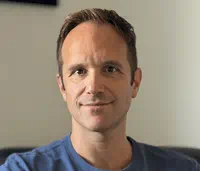
Being exposed to the world of project management was a real eye-opener. It helped give words to things I already knew and gave me definition to what I was already doing.
What surprised you most while preparing for the PMP?
The film industry has a lot of procedures that go back decades. A lot of it is very cowboyish, which I love, but it’s also valuable to have another perspective.
What was eye-opening was discovering this whole world of project management, with a large knowledge base around how to do things correctly—often informed by highly disciplined fields like bridge building and major construction projects.
Being able to take these procedures and apply them to film is great. Even just being able to introduce these ideas to my coworkers has been useful.
Bringing project management methodologies to film production
How has earning the PMP influenced the way you approach film projects?
There’s a tool set. If you can find the right tool for the right problem, you can solve anything and work as a more cohesive team. Even the project management terminology helps me understand what we’re doing better.
Can you share an example of something from that toolbox that you’ve put into practice?
Daily stand-up meetings. On one project, there were some communication and workflow issues when I started, so I thought, “okay, we should start meeting every day.”
They weren’t 15-minute meetings. They started out as one-hour meetings and then slowly got smaller. But just the concept of doing a daily stand-up, where everyone shows up and talks about their issues, was very effective. They start big, then they get smaller because you communicate your way through them.
Using PMI Infinity™ as a shortcut to project knowledge
How does PMI Infinity™ fit into your workflow?
It’s a shortcut to all the knowledge I learned while acquiring my PMP. It’s like, ‘Oh, how did I do that thing again?’ I can ask PMI Infinity™, and it has bespoke information that’s specific to project management rather than going through another AI platform.
PMI Infinity™ is like having an assistant who has all that project management knowledge at the top of their head.
PMI Infinity™ is like having an assistant who has all that project management knowledge at the top of their head.
Why continued learning matters after PMP certification
What value have you found in maintaining the PMP after earning it?
I think the requirement to earn professional development units (PDUs) to keep up your PMP is useful. It reinforces continuous learning. PMI is fantastic at having workshops and resources available to further educate yourself.
That continuing education keeps you up to date with what’s going on, so your certification doesn’t become obsolete.
I think the requirement to earn PDUs to keep up your PMP is useful. It reinforces continuous learning. That continuing education keeps you up to date with what’s going on, so your certification doesn’t become obsolete.
Why project management matters in creative careers
What would you tell someone in the film industry who doesn’t think project management applies to their career?
If you’re doing management in film, the PMP is a huge benefit. It can take you out of the crazy space of filmmaking and television and help you look at the whole project.
It gives you valuable education for what you’re doing. Because yes, what you’re doing is film, but also what you’re doing is project management.
Someone can come from a technical or artistic background and not necessarily have management-specific skills. Someone who is a good artist or editor might not actually be good at managing people. Getting that extra education or certification can help you understand the fundamentals of what it is to work with people and put a project together.
How important are the people skills behind project management in film?
Conflict management comes up in film. Everyone’s busy, people can get the wrong idea and conflict can and will come up. Having tools available to de-escalate and resolve the issue and keep everyone happy and working with each other is super useful.
Yes, what you’re doing is film, but also what you’re doing is project management.
Following your passion through project management
You originally wanted to direct films. What would you tell someone starting their career who wants to follow a passion, even if their path changes along the way?
If you’re not going to follow your inner inclination, then what are you doing with your life? I know it’s not always that easy but go for it. It’s okay to follow your dream. That’s what I did. And most people in the film industry have done some version of that. You have to pursue it in a way where you can sustain it financially. Pursue your dream, but pursue your dream within the practical reality that we live in.
After more than 15 years in the industry, what still lights you up about the work you do?
I love being in a creative environment and working in film. It’s the magic of being in film, and I’ve seen a lot of cool, interesting things as a result. You’re on a film set and suddenly everything’s real, but everything’s not real at the same time. It’s very magical.
But also, the people. The people who work in film are super interesting. They’re creative, they’re dynamic and you don’t make it in this industry unless you’re a really hard worker and reliable. So, they tend to be my kind of people, and they’re dreamers a lot of the time as well, which is also my kind of people.
At the end of the day, I believe in the power of storytelling. Even if everything I make isn’t a masterpiece, as an overall phenomenon.
Tags: Career Development | PMP | AI
At the end of the day, I believe in the power of storytelling.
Outside of Work
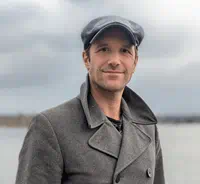
Originally from Spruce Grove, Alberta, Mitchell now calls Vancouver home, where he loves taking advantage of everything the city has to offer—from local events to spotting eagles, seals and otters around Stanley Park. He’s an avid reader with a curiosity for history, mythology and archaeology, and loves discovering great films, including the work of Chinese filmmaker King Hu. One of his favorite travel memories is a trip to the Cook Islands, where a night around a beach fire—complete with bagpipes, a full moon and tropical waves—became a story he’ll never forget.
Bring Project Management to What You Love
Whether you work in film, technology, construction or another industry entirely, project management skills can help turn experience into a stronger, more intentional approach to leading work and people.
FAQ: Project Management in Film and Television
Is the PMP useful in film and television?
Yes. Film and television projects require professionals to coordinate people, workflows, timelines and competing priorities. The PMP certification can provide a structured approach and practical tools for managing that complexity.
How is project management used in film production?
Project management can help film teams organize work, improve communication and keep people aligned throughout a production.
What project management skills are useful in post-production?
Communication, organization, problem-solving, team leadership and conflict management can all be valuable in post-production. Because creative projects involve many people working under pressure, project management skills can help teams resolve issues, collaborate effectively and keep work moving forward.
How can AI tools support project management in film and television?
AI tools can help project professionals quickly access information and revisit project management concepts as questions arise in their work. PMI Infinity™ may be used as a resource for recalling and applying project management knowledge from PMP studies.
About the Author
Autumn Granza, CAPM
Integrated Marketer
Autumn Granza is an integrated marketer and storyteller passionate about uncovering the human stories behind projects and their impact on the world around us. At PMI, she develops marketing campaigns and multichannel content strategies that engage audiences, inspire action, and connect people with the power of project management. Her work spans campaign strategy, storytelling, and audience engagement, helping people discover project management in places they might never expect.
Read More from PMI Blog



Related Insights
The Art of Project Management: Creativity, Connection and Joy at Work
Project leaders share how creativity, leadership, and connection help them deliver meaningful work and build joyful, diverse team environments.
You May Also Like

Certification
Project Management Professional (PMP)®
3+ years of experience leading projects
Future-proof your skills
Discover AI technologies redefining how projects are managed.
PMBOK® Guide
PMI Standard
Backed by the authority of PMI and shaped by professionals worldwide, the PMBOK® Guide defines the global standard for project management.