What Does Project Management Have to Do with the World Cup? An Insider Explains
Haris Khan, PMP, shares how volunteering at the World Cup 2026 gave him a behind-the-scenes view of one of the world's most complex events. He explains how project management principles—including stakeholder engagement, logistics, risk management, communications, accessibility and teamwork—help deliver a seamless experience for millions of fans.

A Project Management Professional (PMP)® holder shares what it really takes to deliver an unforgettable FIFA World Cup fan experience and why seeing it behind the scenes changed the way he views project management forever.
Key Takeaways:
- The World Cup is one of the world's largest and most complex project management initiatives, requiring years of planning across multiple host cities and thousands of stakeholders.
- Project management makes the fan experience possible by coordinating logistics, volunteers, communications, accessibility, risk management, transportation, safety and stakeholder engagement.
- Haris Khan, PMP, applied project management skills while volunteering at the World Cup 2026, supporting accommodation, hospitality and fan experience operations.
- Earning the PMP helped Haris recognize the planning, leadership and coordination behind one of the world's biggest sporting events.
- The same project management principles used to deliver a successful World Cup can help professionals lead complex projects in virtually any industry.
For billions of fans, the World Cup is about unforgettable moments on the pitch. For Haris Khan, PMP, volunteering at World Cup 2026 offered a rare opportunity to experience something else entirely: the massive project behind the tournament.
Haris Khan, PMP®, is a Project Management and Accessibility Consultant at Outreach Strategists who earned his PMP certification in 2024, and applied to be a World Cup volunteer in 2025.
While volunteering at the World Cup 2026 in Houston, Haris worked across accommodation, fan experience and hospitality, and saw firsthand how planning, communication, stakeholder engagement, risk management and teamwork come together to create one of the world's largest sporting events.
Project management plays a critical role in delivering the World Cup. Organizers must coordinate thousands of stakeholders, volunteers, vendors, host cities, transportation systems, accessibility requirements, safety plans, communications programs and fan experiences across multiple venues. Effective project management keeps these complex efforts aligned, helping ensure one of the world's largest sporting events is delivered safely, efficiently and successfully.
We spoke with Haris about viewing the World Cup through a project management lens, the personal journey that brought him there, and the lessons he'll carry forward.
What is the Project Management Professional (PMP)® certification?
The Project Management Professional (PMP)® certification is a globally recognized certification for experienced project professionals. It validates the ability to lead and deliver projects using predictive, agile and hybrid approaches, and signals that project professionals can manage scope, teams, risk, value delivery and business outcomes across industries. It is widely seen as a benchmark certification for project leadership and career advancement.
Your journey to the World Cup began long before you became a volunteer. What made this experience so meaningful?
My dad introduced me to the World Cup in 1994 when I was a child. He also introduced me to Brazil, and that is where my love for the World Cup really began. My dad passed away in 2022, so on my first day volunteering at the World Cup 2026 in Houston, I felt both excited and emotional.
I kept thinking about him and how proud he would have been. He is no longer here with us, but he is always in my heart. In many ways, this feels like a full circle moment. The little boy who watched the World Cup with his dad in 1994 is now helping support the fan experience at the world's biggest sporting event.
Seeing the World Cup through a project management lens
How has earning your PMP helped you see opportunities like the World Cup differently?
Earning my PMP changed the way I look at major events. When I think about the World Cup, I see more than the matches and excitement. I also think about all the planning happening behind the scenes, with risk management, communication, stakeholder engagement, logistics, accessibility and team responsibilities.
The PMP has trained me to look at the process behind every major deliverable and ask, “What did it take to make this happen?”
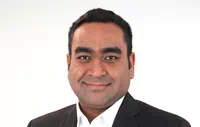
Earning my PMP changed the way I look at major events.
If someone asked you what project management has to do with the World Cup, what would you tell them?
I would say it has everything to do with project management. The World Cup brings together teams, fans, volunteers, host cities, sponsors, vendors and many other stakeholders.
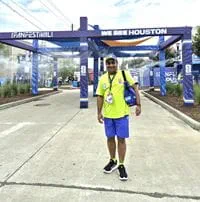
Name: Haris Khan, PMP
Job: Project Management and Accessibility Consultant at Outreach Strategists
Event: World Cup 2026 (Houston)
Volunteer Focus: Accommodation, fan experience and hospitality
Key Skills: Stakeholder engagement, risk management, accessibility, communications, logistics and community engagement
What it takes to deliver a world-class fan experience
As a PMP, what is the first thing you noticed behind the scenes that most fans would never see?
I noticed how many people and activities must be coordinated to create an experience that feels simple to the fans.
All those activities must be broken down into smaller tasks, assigned to the right people, and brought together under one overall plan. From the early planning stages to the final trophy presentation, project management is working behind the scenes.
Fans see the matches and celebrations. Behind them are schedules, trained volunteers, safety procedures, accessibility planning, communications, transportation, logistics and backup plans. A smooth fan experience is the result of many people doing their jobs well.
What has impressed you most about the planning behind the World Cup?
I was impressed by the level of organization. The volunteer training, shift reminders, safety procedures, communications, and on-site responsibilities were all clearly explained.
When everything appears smooth and simple to the fans, you know that a great deal of work has happened behind the scenes.
Has anything made you think, "Wow, this is project management at its best"?
Yes. While I was volunteering at the Fan Festival in Houston, a thunderstorm moved into the Houston area. Operations were quickly paused, staff and volunteers moved to designated shelters, and safety instructions appeared on the digital boards.
For me, that was risk management in action. People understood their responsibilities, communication was clear, and safety came first. It showed me that a good risk plan is not just a document. It must be ready to use when the situation changes.
Lessons from volunteering at the World Cup
What's one thing the World Cup has reminded you about why you became a project professional in the first place?
It reminded me that project management is really about people. Plans, schedules and budgets matter, but the goal is to help people work together and achieve something meaningful.
Seeing so many staff members and volunteers come together to create a memorable experience reminded me why I enjoy this profession.
Project management is really about people. Plans, schedule and budgets matter, but the goal is to help people work together and achieve something meaningful.
Building a career in project management
Tell us about your work. What types of projects do you lead or support?
I work as a Project Management and Accessibility Consultant at Outreach Strategists, a public relations, marketing and community engagement firm in Houston, Texas.
My background is in environmental, and over the years I have also developed experience in public relations, stakeholder engagement, accessibility and people management.
I have led or supported projects in environmental sustainability, healthcare, education, social services, technology, public outreach and event management.
That is one of the things I love about project management. The same core skills of leadership, communication, planning and problem-solving can be applied across many different industries.
What first attracted you to project management as a career?
My introduction to project management came from an unexpected place: stand-up comedy. When I started performing as stand-up comedian, I also began organizing fundraising comedy shows to support local nonprofits. I coordinated performers, venues, promotions, schedules and community partners to bring each event to life.
At the time, I did not realize these were my first projects. It was only later, after learning the PMI definition of a project that I understood I had already been practicing project management.
I have always been a people person, so when I discovered that project management brings together communication, leadership, organization and relationship-building, it felt like a natural fit for me.
You could say project management found me before I knew what to call it.
What lessons from the World Cup will you bring back to your day job?
The experience reminded me of the importance of preparation, clear communication, teamwork and flexibility. You need a strong plan, but you must also be ready to adjust when circumstances change.
It also reminded me that people remember how an experience made them feel. Whether we are serving fans, residents, clients or community partners, project success is not only about completing tasks. It is also about creating a positive and meaningful experience for the people we serve.
Why earn a PMP certification?
Why did you decide to pursue your PMP?
I had already worked in project management, but I wanted to strengthen my knowledge and learn internationally recognized best practices.
I also wanted to challenge myself and demonstrate my commitment to the profession. Earning my PMP in 2024 was an important personal and professional milestone for me.
The PMP gave me more confidence in my knowledge and abilities. It helped me better understand why certain approaches work and how to apply them in different situations.
How did earning your PMP change your confidence or career outlook?
I had managed projects before earning the certification, but the PMP gave me more confidence in my knowledge and abilities. It helped me better understand why certain approaches work and how to apply them in different situations.
It also strengthened my professional credibility. The PMP shows employers and clients that I have the experience, knowledge, and commitment needed to lead projects.
What opportunities has PMP certification opened for you?
The PMP has helped me pursue more advanced roles and become involved in larger and more complex projects. It has also given me more confidence when working with clients, executives, partners and multidisciplinary teams.
The PMP has helped me pursue more advanced roles and become involved in larger and more complex projects.
It connected me with the wider project management community and encouraged me to see new experiences even volunteering as opportunities to learn and use my skills.
What advice would you give to other project professionals who want to pursue something they're passionate about?
Believe in yourself and start with the skills and resources you have today. You do not have to be perfect before taking the first step.
I often remind people that every professional was once an amateur. Keep learning, remain curious, and be willing to volunteer for opportunities that matter to you. You never know where that first step may lead.
What lights you up about the work you do?
I love working with people, building relationships and helping turn ideas into results. I enjoy bringing people together around a common goal and helping a team move forward when challenges arise.
The most rewarding part is seeing our work make a positive difference in a community.
Tags: PMP | Project Management | Volunteer | Leadership
Bring Big Events to Life
The world's biggest events don't happen by chance. Explore how PMI certifications can help you build the skills to plan, lead and deliver complex projects with confidence.
FAQs
How is project management used in major sporting events?
Project management helps organizers coordinate the many interconnected activities required to deliver a major sporting event. These include schedules, venues, transportation, vendors, volunteers, communications, safety, accessibility, hospitality and the fan experience. Project professionals help keep these efforts aligned with the event’s goals, timeline and operational requirements.
What project management skills are needed for the World Cup?
Delivering the World Cup requires skills in stakeholder engagement, logistics, communications, volunteer management, risk management, accessibility planning, teamwork and problem-solving. These capabilities help organizers coordinate host cities, venues, partners, vendors, volunteers and fans while responding effectively when conditions change.
Can volunteering help build project management experience?
Yes. Volunteering can provide practical experience in planning, scheduling, communication, teamwork, stakeholder engagement and problem-solving. Volunteers may also gain exposure to complex operations and see how project plans are carried out in real-world environments.
How does risk management support major events?
Risk management helps event teams identify potential disruptions, prepare response plans and act quickly when circumstances change. During the World Cup Fan Festival in Houston, for example, operations were paused when a thunderstorm approached, and staff and volunteers followed established shelter and safety procedures. Clear roles and communication helped protect attendees and keep the response coordinated.
How does PMP certification support event management?
PMP certification validates project leadership skills that can be applied to event management, including planning, stakeholder engagement, communications, team leadership, risk management and adapting to change.
About the Author
Autumn Granza, CAPM
Integrated Marketer
Autumn Granza is an integrated marketer and storyteller passionate about uncovering the human stories behind projects and their impact on the world around us. At PMI, she develops marketing campaigns and multichannel content strategies that engage audiences, inspire action, and connect people with the power of project management. Her work spans campaign strategy, storytelling, and audience engagement, helping people discover project management in places they might never expect.
Read More from PMI Blog


Related Insights
From the Olympics to F1: How Project Teams are Making Events More Sustainable
We speak with project leaders about making two major spectacles—the Paris Olympics and Formula 1’s Abu Dhabi Grand Prix—more sustainable.
You May Also Like

Certification
Project Management Professional (PMP)®
3+ years of experience leading projects
Exam Prep
Test your knowledge of the PMP, CAPM, and other PMI certifications with the PMI exam prep courses, resources, and practice tests.
PMBOK® Guide
PMI Standard
Backed by the authority of PMI and shaped by professionals worldwide, the PMBOK® Guide defines the global standard for project management.